
For decades, breathwork applications have relied on the same fundamental approach: extensive libraries of pre-recorded sessions categorized by intended outcome—calming, energizing, focusing, or preparing for sleep. While this model appears logical, it contains a critical flaw that undermines its effectiveness.
The Hidden Problem with Choice Overload
When someone reaches for a breathwork app, they're rarely in an optimal state for decision-making. They might be experiencing overwhelm, anxiety, mental fog, or exhaustion. In these moments, asking a dysregulated nervous system to analyze options and select the "correct" practice becomes counterproductive.
The Decision Paralysis Challenge
Research in neuroscience shows that stress and emotional dysregulation significantly impair our ability to make effective choices. The very state that drives us to seek breathwork often prevents us from choosing the most beneficial practice.
This realization led us to reconsider the entire approach. Instead of expanding choice, what if we could eliminate the burden of choice entirely? What if the technology could make intelligent decisions on the user's behalf?
Building Intelligence into Breathwork
At OceanMind, we've developed a revolutionary AI-powered system that generates breathing practices dynamically, creating sessions tailored to each moment rather than selecting from predetermined options.
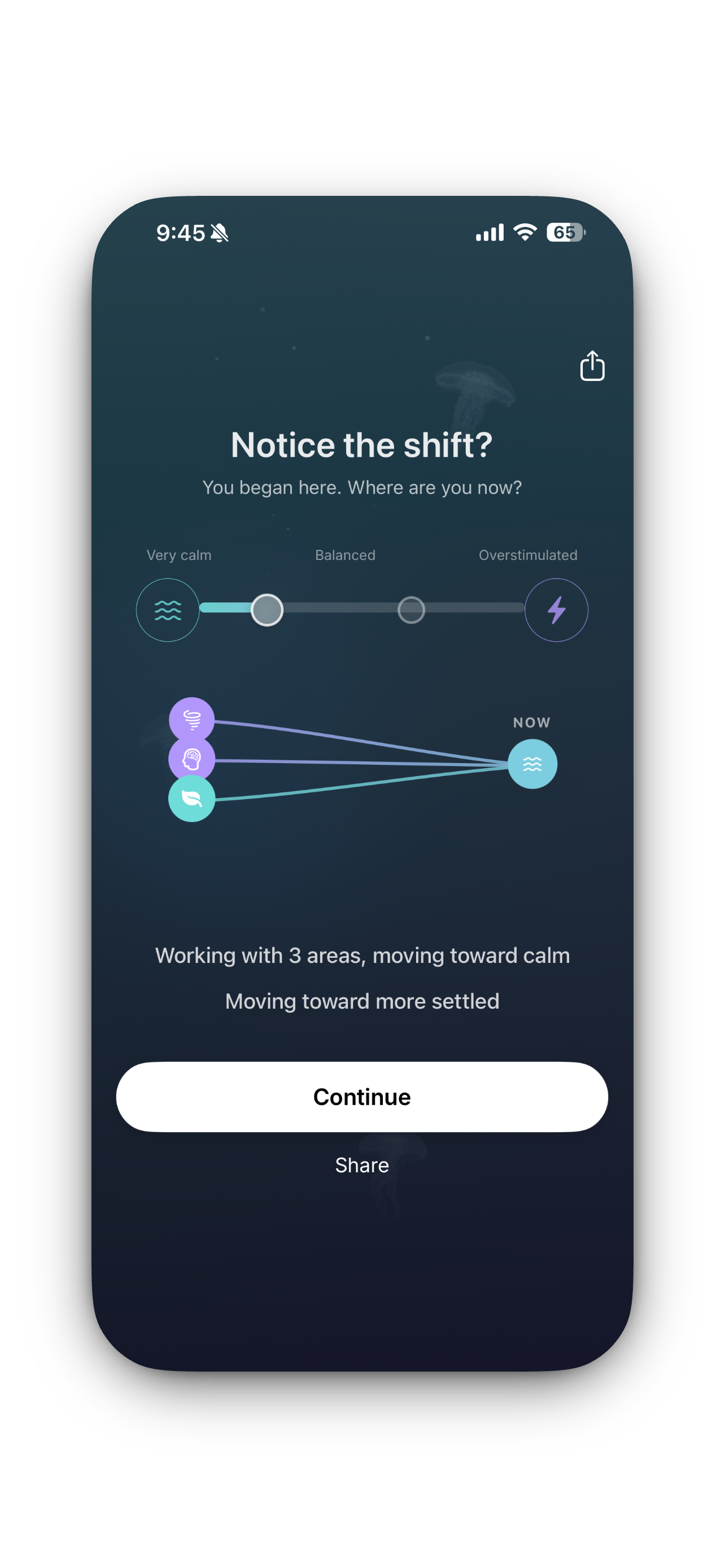
Our adaptive system analyzes multiple data points in real-time:
- Current State Assessment: Brief but comprehensive check-ins that gauge emotional and physical condition
- Practice History: Patterns from previous sessions and their reported effectiveness
- Response Analytics: How your nervous system typically responds to different breathing patterns
- Contextual Preferences: Your preferred session duration and timing patterns
- Progressive Development: How long you've been practicing and your advancing capabilities
Rather than presenting options, the system constructs a structured breathing sequence specifically designed for that particular moment—not generic, not randomized, but precisely adaptive.
The Research That Changed Everything
Our internal studies comparing different approaches yielded surprising results. We tested two distinct methodologies with the same user groups:
Traditional Approach: User-selected practices from content library
Adaptive Approach: AI-generated, state-specific practices
The adaptive sessions produced 70% stronger reported state shifts compared to user-selected practices. Even more remarkably, experienced practitioners—individuals with deep understanding of breathwork techniques and confident self-selection abilities—experienced superior outcomes with dynamically generated sessions.
"This suggests something profound: while self-awareness provides valuable insight, adaptive systems that process more data points can often make more effective decisions than conscious choice alone."
Understanding Dynamic Breathwork Needs
Human nervous system states are inherently fluid. A breathing pattern that feels energizing and appropriate in the morning might feel overwhelming or inappropriate in the evening. A calming technique that provided perfect support yesterday might feel insufficient when facing today's different challenges.
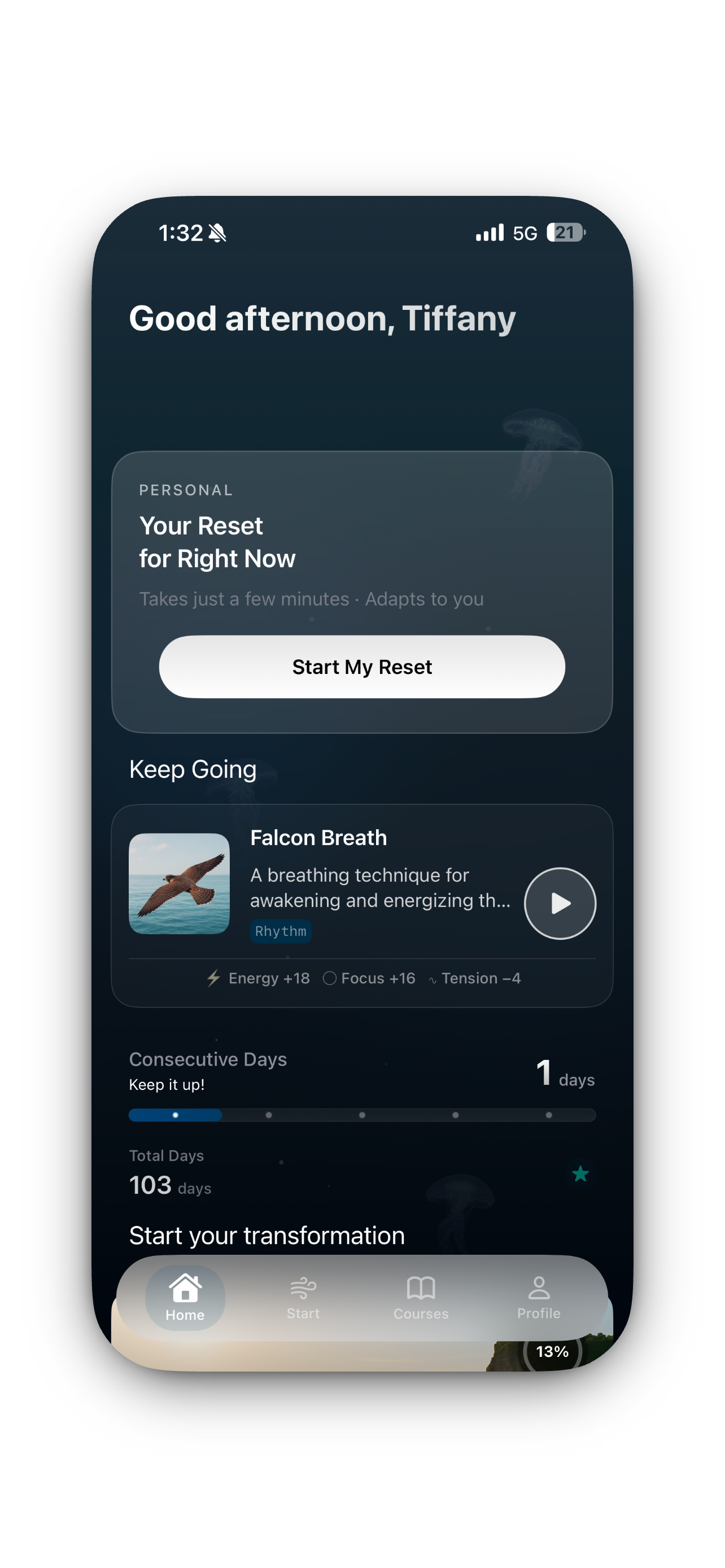
The same individual can cycle through states of stress, fatigue, clarity, and restlessness within a single day. Static content libraries cannot accommodate this natural variability, but intelligent systems can respond fluidly to these changing needs.
Personalization Beyond Preferences
Our AI doesn't just remember what you've chosen before—it analyzes how different breathing patterns affect your specific nervous system. This allows for adjustments in:
- Rhythm Complexity: Adapting to your current cognitive capacity
- Session Intensity: Matching your energy levels and needs
- Pattern Progression: Building skills without overwhelming your current capabilities
- Duration Optimization: Providing exactly the right amount of practice for maximum effectiveness
The Paradigm Shift
We're witnessing a fundamental transformation in wellness technology—a movement from content delivery to contextual intelligence. This represents several evolutionary steps:
From Library to Guidance
Moving beyond static collections toward active direction and support that understands context.
From Guidance to Personalization
Progressing from general recommendations to individually tailored experiences based on personal data and preferences.
From Personalization to Real-Time Adaptation
Evolving from static personalization to dynamic systems that adjust to current state and changing needs moment by moment.
The March 2026 Release
On March 15, 2026, we're launching this adaptive practice generator as a core feature within OceanMind. Users will experience breathwork that feels genuinely responsive—like the app truly understands their current needs and state.
Experiencing Adaptive Breathwork
When you open the updated OceanMind app, instead of browsing through session categories, you'll receive a structured practice built specifically for your current moment. The experience eliminates guesswork, reduces overwhelm, and provides clear direction when you need it most.
This isn't about adding artificial intelligence as a marketing feature—it's about fundamentally reimagining how technology can serve human regulation and well-being. The goal is technology that doesn't just deliver information but adapts intelligently to the person using it.
The Future of Nervous System Design
We believe the next phase of wellness applications isn't about creating more content—it's about developing contextual intelligence. Systems that don't simply respond to what you ask for, but understand what you actually need based on comprehensive data analysis.
True regulation doesn't come from doing more practices or having more options. It emerges from engaging with practices that align precisely with current needs and capacity. When technology can bridge the gap between where you are and where you need to be, wellness becomes less effortful and more naturally integrated into daily life.
Beyond Individual Practice
As our AI system learns from thousands of users, it becomes more sophisticated in its ability to generate effective practices. Every session contributes to collective intelligence while maintaining individual privacy and personalization.
This adaptive approach represents more than technological advancement—it's a new understanding of how artificial intelligence can enhance rather than replace human wisdom, creating tools that truly serve our deepest needs for balance, calm, and effective self-regulation.